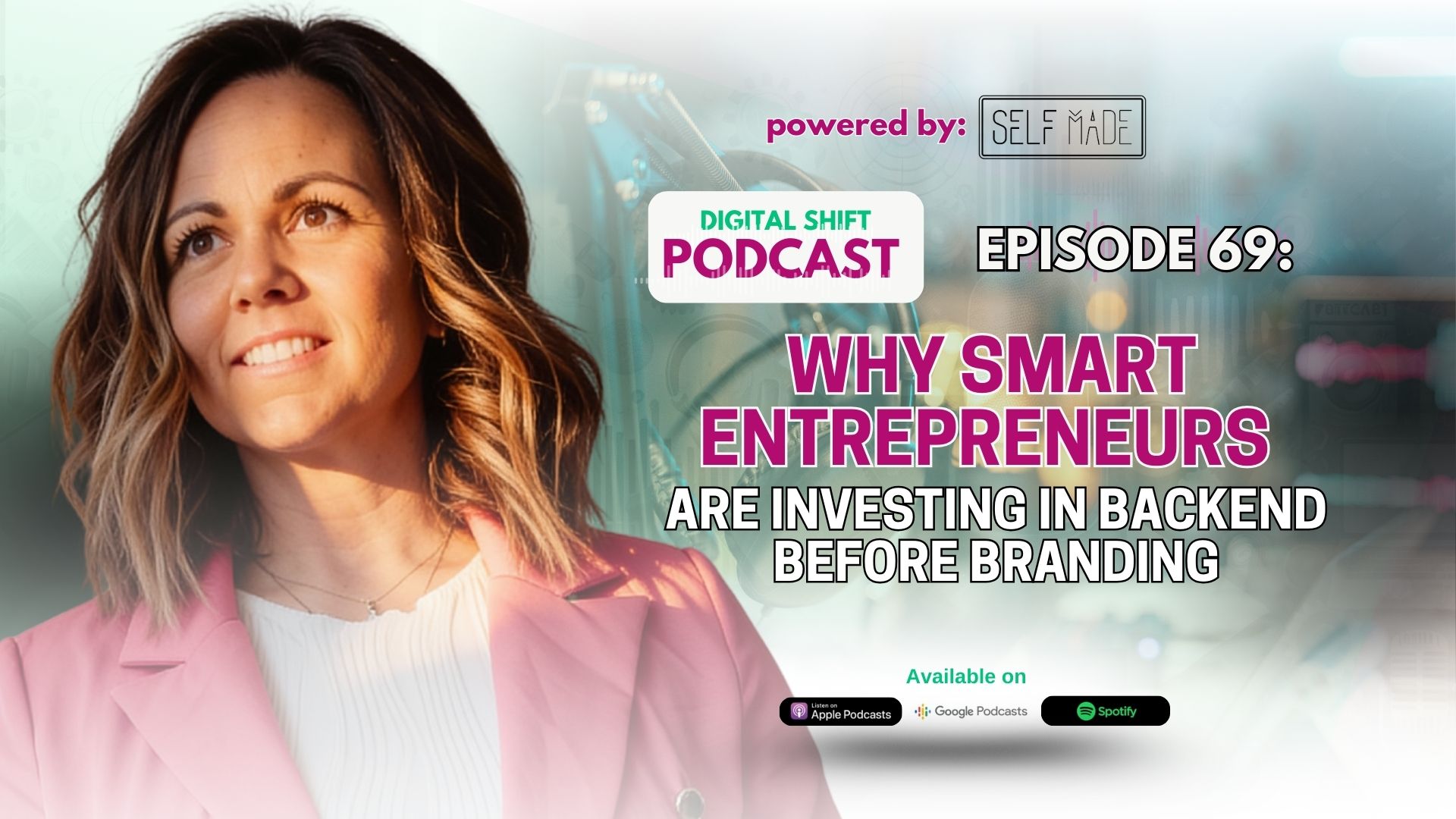
Podcast Episode 69 — Why Smart Entrepreneurs Are Investing in Backend Before Branding
Everyone online is telling entrepreneurs the same thing:
Build your brand.
Improve your aesthetic.
Upgrade your content.
Perfect your messaging.
But what if that advice is incomplete?
In Episode 69 of The Digital Shift™, host Natasha Roberson challenges the idea that branding is the primary driver of business growth.
Because here’s the uncomfortable truth:
If your backend is broken, your brand won’t save you.
This episode explores why serious entrepreneurs in 2026 are shifting their focus away from aesthetics and toward infrastructure — and why backend systems are becoming the real competitive advantage.
The Shift Happening in Online Business
For years, online marketing emphasized visibility:
Beautiful branding
High-quality photos
Perfect color palettes
Viral social media content
And while those elements help attract attention, they don’t necessarily produce consistent revenue.
That’s because branding captures attention — but systems convert attention into sales.
As Natasha explains in this episode:
“Brand creates interest. Infrastructure creates income.”
In today’s environment, the businesses that scale are the ones with structured backend systems that nurture leads, build trust, and guide buyers through a clear journey.
The Rise of the “Trust Recession”
Another major theme in this episode is what many entrepreneurs are now calling the Trust Recession.
Modern buyers are:
More skeptical
Slower to purchase
More intentional with their investments
Many have previously purchased programs, courses, or services that didn’t meet expectations. As a result, they now take longer to decide.
This shift means impulse purchases are becoming less common.
Instead, buyers expect:
Multiple trust-building touchpoints
Follow-up communication
Clear onboarding processes
Proof and credibility before committing
A beautiful Instagram feed or polished brand aesthetic cannot deliver that level of reassurance.
A well-designed backend system can.
Why Backend Systems Create Credibility
The moment someone enters your world — by opting into a lead magnet, attending a webinar, or downloading a guide — they immediately evaluate how professional your business feels.
What happens next matters.
Do they receive:
A thoughtful welcome message?
Clear instructions on what to do next?
Structured nurture emails or SMS messages?
Proof of results and testimonials?
Strategic reminders that guide them forward?
Or do they hear nothing at all?
Your backend is more than a technical setup.
It’s a signal of credibility.
When systems are organized and consistent, prospects feel confident that the business they’re engaging with is trustworthy and established.
And in a trust recession, confidence converts.
The Difference Between Attention and Conversion
Many entrepreneurs successfully attract attention but struggle to turn that attention into revenue.
The difference usually comes down to infrastructure.
Branding helps you get the click.
But backend systems guide the customer journey.
That journey typically moves through several stages:
Stranger discovers your brand
Visitor becomes a lead
Lead receives nurture and education
Lead becomes a buyer
Buyer becomes a repeat customer
Without systems supporting each stage, that journey often stalls.
Automation, segmentation, and strategic follow-up ensure that prospects continue moving forward instead of falling through the cracks.
What Your Backend Should Include in 2026
According to Natasha, every serious entrepreneur should prioritize several foundational systems.
1. A CRM That Tracks Behavior
Your Customer Relationship Management (CRM) platform should track key interactions such as:
Email opens
Link clicks
Webinar attendance
Website behavior
Understanding these signals helps you identify which leads are interested and ready for deeper engagement.
2. A Nurture Engine
A structured email and SMS sequence helps build trust over time.
Rather than relying on a single promotional message, nurture systems deliver ongoing value, proof, and education — helping prospects feel confident about buying.
3. Audience Segmentation
Not every lead needs the same message.
Segmentation allows you to send different communications based on behavior, interests, and stage of the customer journey.
This level of personalization significantly improves engagement and conversions.
4. Action-Based Automation
Modern marketing systems can trigger messages based on user behavior.
For example:
Someone clicks your pricing page → send additional information
Someone watches most of your webinar → send an offer reminder
Someone downloads a guide → begin a nurture sequence
These automated touchpoints create the feeling of personal attention without requiring constant manual work.
5. A Clear Customer Journey
Perhaps most importantly, your business needs a clearly defined path that guides people from:
Stranger → Lead → Buyer → Repeat Buyer
When that journey is unclear internally, it becomes confusing externally.
And confusion is one of the fastest ways to lose a potential customer.
Who This Episode Is For
Episode 69 is ideal for:
Entrepreneurs focused heavily on branding but struggling with conversions
Coaches, consultants, and course creators who want more predictable revenue
Business owners who feel overwhelmed by disorganized backend systems
Anyone ready to move from “looking like a business” to operating like one
If your marketing attracts attention but your sales feel inconsistent, this episode will help you identify where the gap exists.
Key Lessons from Episode 69
Branding alone does not create consistent revenue
The Trust Recession has changed how people make buying decisions
Backend systems build credibility and buyer confidence
Segmentation and behavior-based messaging increase trust
Automation and structured nurture systems convert attention into sales
Infrastructure is becoming the true competitive advantage for modern entrepreneurs
Ready to Build the Machine Behind Your Brand?
If this episode made you realize your backend systems need work, there’s a way to implement these strategies with expert support.
Inside LAB, the team at Self Made helps entrepreneurs build the operational infrastructure that powers scalable businesses.
Participants learn how to:
Set up a CRM that tracks lead behavior
Install nurture and automation systems
Create segmentation strategies that convert
Engineer the backend revenue machine behind their brand
👉 Join LAB:
www.self-made.biz/lab
If you’re unsure whether LAB is the right fit, you can also book a discovery call to map out the best next step.
📅 Schedule a Discovery Call:
www.self-made.biz/discoverycall
Final Thoughts
Branding will always play a role in business growth.
But in 2026, visibility alone is no longer enough.
The entrepreneurs building sustainable businesses are the ones investing in systems that nurture leads, build trust, and guide customers through a structured journey.
Because while branding creates interest…
Infrastructure creates income.